“What is the child likely to miss out on when the instruction places a heavy emphasis on letters, sounds, and words in reading or spelling, which steals all the child’s attention?”– Clay (2001, p. 5)
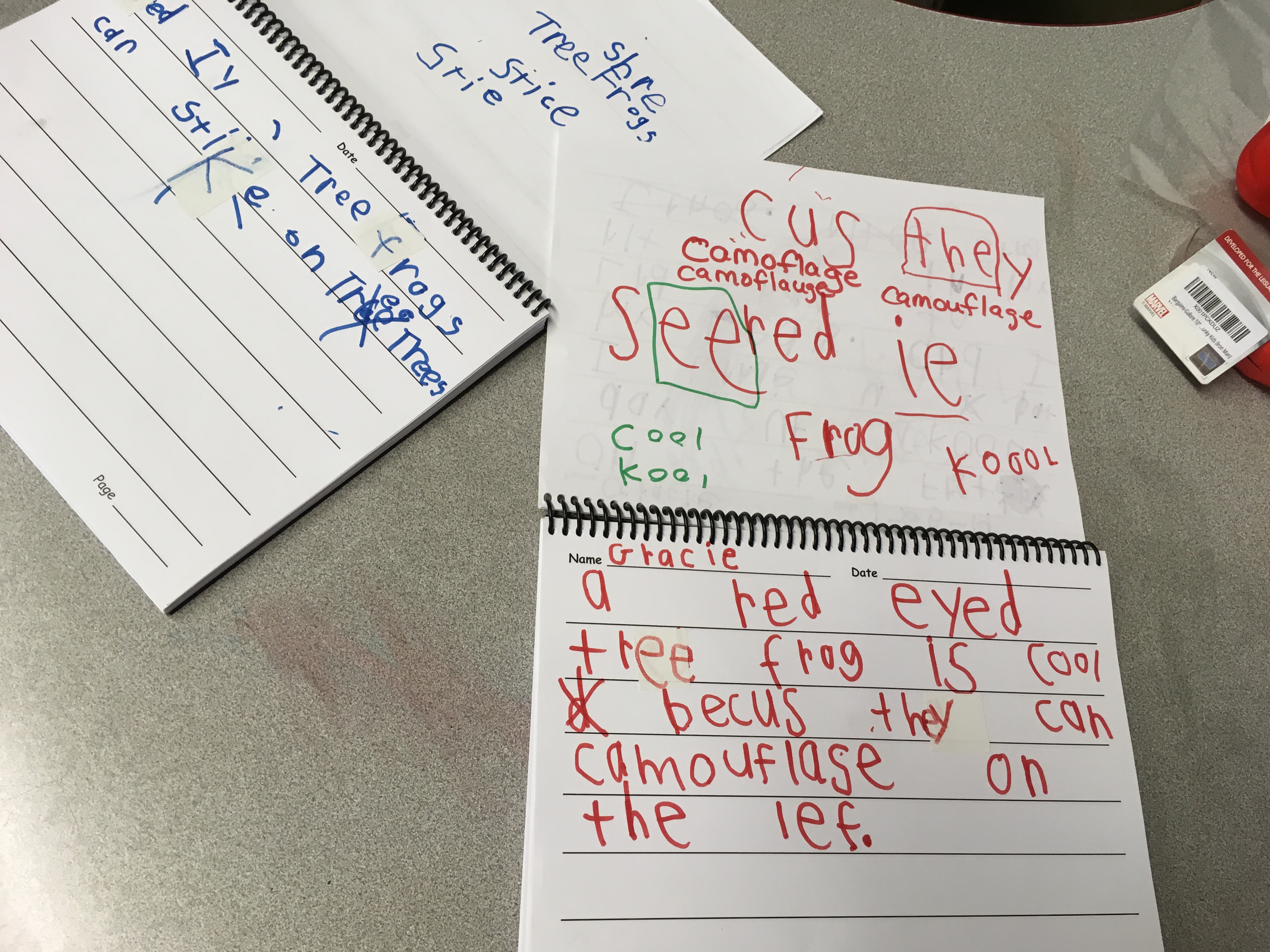
When we have children write, we as them to talk about their message first. We thoroughly engage them in thinking about what they know and want to convey to others. Then, we invite them to write. The common misconception about young children’s writing is that they should have prerequisite knowledge before writing – mainly a core of real words and proper alphabetic knowledge. Unfortunately, this way of thinking results in young writers not writing, and it becomes a true assumption (Clay, 2001). In our illustration, a kindergarten student wrote, “A red eyed tree frog is cool because they can camouflage on the leaf.” His teacher listened carefully to his message, and anticipated what he knew and where he might need assistance. She allowed him to take control of all those things he knew, and she assisted his partially known and demonstrated the new – to help him complete his message. This is writing!
Clay, M.M. (2001). Change over time in children’s literacy development. Portsmouth, NH: Heinemann.

 Rich Literacy